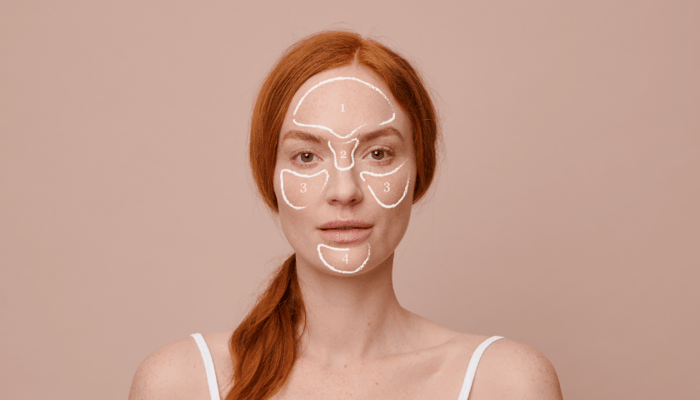

Traditional Chinese medicine suggests our faces are maps. Each zone corresponds to different internal organs, and the state of each area can reveal how well those organs are functioning. Modern dermatology doesn't fully endorse the connection, but we've seen clear patterns in working with sensitive, spot-prone skin.
Many customers who struggle with breakouts have their trouble spots. The same areas, month after month. Sometimes it's hormonal. Sometimes it's habits. Often it's both.
Here's what spots in different areas might be telling you:
Forehead: The Stress Zone
In face mapping, the forehead connects to your bladder and digestive system. In practice, forehead spots often signal stress and dehydration. Your body's trying to process too much, too fast.
The fix starts with water. Proper hydration helps your body flush waste efficiently. Add fibre-rich foods and green tea to support the process. And check your hair products. Heavy oils and styling products can migrate onto your forehead, especially during workouts or between washes. Keep hair pulled back when exercising and choose lighter formulas if you're prone to forehead breakouts.
Between the Brows: The Indulgence Indicator
Face mapping links this area to the liver. Translation: those spots that appear after a big night out or a weekend of rich food aren't coincidence.
Your liver processes alcohol and breaks down fats from food. Overload it, and your skin shows the strain. Cut back on refined sugar, salt, and processed foods. Choose fresh, home-cooked meals instead. And yes, reduce the alcohol. It's a diuretic that dehydrates skin and depletes nutrients, leaving you with that telltale grey complexion the next morning.
Cheeks: The Environmental Response
Traditional mapping connects cheeks to the respiratory system. If you're prone to colds or chest infections, you might notice more spots here. But there's a more common culprit: your phone.
Studies show phone screens harbour 10 times more bacteria than toilet seats. Every call transfers that bacteria to your cheek. Wipe your screen with an antibacterial cloth every few days. Switch to headphones for longer calls.
Small spots with redness on the cheeks might indicate rosacea rather than standard acne. Our rosacea guide explains the difference and what helps.
Chin & Jawline: The Hormonal Highway
This is where hormones make their presence known. Spots here often follow your cycle, appearing at the same time each month. They're also common when starting or stopping contraception, during pregnancy, or when dealing with hormonal conditions.
Hormonal acne resists topical treatment because the trigger is internal. You need a holistic approach that addresses the imbalance from within. Our comprehensive hormonal acne guide breaks down what actually works.
For targeted support, Love And Haight combines antibacterial chia seed oil with soothing sea buckthorn. The formula helps calm inflammation while your body rebalances. And unlike heavy spot treatments that strip skin, it maintains your barrier function.
Making Sense of Your Skin Map
Face mapping has no scientific basis. Your forehead spots probably have nothing to do with digestion. Your chin breakouts might be contact dermatitis, not hormones. But patterns matter. If the same areas flare repeatedly, there's usually a reason.
Track your breakouts for a month. Note when they appear, what you ate, how you felt, where you were in your cycle. The connections often become clear. Then you can address the cause, not just the symptom.
Remember: everyone's map is different. What triggers spots for your friend might leave your skin untouched. Understanding your personal patterns is the first step to clearer skin.