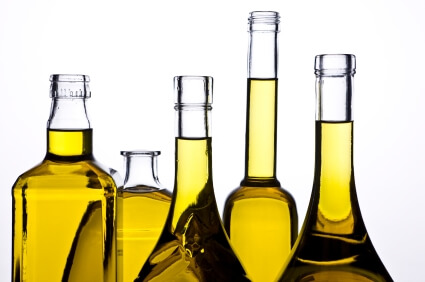

Every skincare brand uses oils. Not every skincare brand uses the right ones.
At Pai, we exclusively formulate with vegetable oils, never esterified oils. This isn't about following trends or ticking organic boxes. It's about understanding skin biology and choosing ingredients that actually work with your skin's natural processes.
Here's what that means for your face.
The science of vegetable oils
Vegetable oils are naturally occurring oils made up of triglycerides, as well as skin-loving vitamins and regenerative sterols. These triglycerides have the same structure as the lipids in skin cell membranes. Think of it as molecular matchmaking: when an oil shares your skin's structure, your skin recognises it as friend, not foe.
Triglycerides typically represent greater than 95% of the composition of natural oils. But it's the remaining 5% that makes vegetable oils special. This fraction contains vitamins, antioxidants, and unsaponifiable matter that varies by geographical origin and production method. These compounds are what give rosehip its regenerative power, argan its barrier-strengthening properties, and jojoba its sebum-balancing abilities.
This affinity allows the skin to easily absorb the oil's skin-nourishing, conditioning and protecting components. Your skin barrier doesn't just tolerate vegetable oils. It welcomes them.
Why brands use esterified oils (and why we don't)
Esterified oils sound technical, and they are. They're processed oils of natural origin, often extracted from palm oil and sometimes from coconut oil. Despite their naturalness, they have undergone a transformation of their chemical structure and are inert.
The process involves two chemical steps. First, saponification breaks down vegetable oil using alkaline components to separate fatty acids from glycerol. Then esterification uses an acid environment to create synthetic triglycerides, or esters. The result? An oil that's technically derived from plants but chemically reconstructed.
Why do brands use them? Three reasons: they're colourless, odourless, and cheaper than vegetable oils. They're widely used for their low cost, stability, and dry feel on application. For mass-market products where consistency and shelf life trump efficacy, they make business sense.
But here's what gets lost in translation: These fatty acids are so beneficial for the skin, yet they're lost during processing. The vitamins disappear. The antioxidants vanish. The sterols that support skin regeneration? Gone. What's left is a neutral oil that feels pleasant but does very little for your skin.
What facial oils actually do for your skin
The right facial oil doesn't just sit on your skin's surface. Facial oil, rich in fatty acids, acts as reinforcing mortar. It replenishes moisture to help soften the look and feel of the skin, while creating a light, breathable layer on the surface.
This matters because face oils provide intense hydration thanks to their small molecular structure. They penetrate the skin easily and lock in moisture. But hydration is just the beginning.
Since some facial oils are antioxidants and have vitamins like C and E, they neutralize free radicals to slow the aging process. Certain facial oils have hydration properties that restore and strengthen the skin's natural protective barrier. For sensitive skin, this barrier support is crucial. A compromised barrier leads to irritation, dryness, and reactions to products that should be gentle.
Different oils excel at different jobs. Jojoba oil mimics the skin's natural sebum, which can help balance oil production. Rosehip oil is rich in antioxidants and vitamins and can help combat signs of aging by promoting collagen production. At Pai, our Rosehip BioRegenerate Oil uses CO2 supercritical extraction to preserve 700% more antioxidants than cold-pressed versions. That's not marketing speak. That's independently verified data.
How to spot the difference on an ingredient list
Reading skincare labels shouldn't require a chemistry degree, but knowing what to look for helps. Vegetable oils follow a simple naming pattern: the plant's Latin name followed by "oil". Helianthus Annuus Oil is sunflower. Rosa Canina Seed Oil is rosehip. Simmondsia Chinensis Seed Oil is jojoba.
Esterified oils have synthetic-sounding names because that's what they are: synthetic reconstructions. Look for patterns like "-yl -ate" (Octyl Palmitate, Isopropyl Myristate) or Caprylic/Capric Triglyceride, Hydrogenated Vegetable Oil. These aren't harmful, but they're not doing much good either.
Organic labels allow esterified oils today. They're not harmful to the skin, they just lost their unsaturated fatty acids and their unsaponifiables during processing. So even "natural" or "organic" on a label doesn't guarantee you're getting oils in their most beneficial form.
The Pai approach: vegetable oils that work
We use vegetable oils across our entire range because they deliver what sensitive skin needs: barrier support, antioxidant protection, and genuine nourishment without irritation. Our Light Fantastic Brightening Face Oil combines rosehip, jojoba, and sea buckthorn oils to brighten and balance. Our Impossible Glow Bronzing Drops suspend mica in a base of nourishing plant oils, not synthetic esters.
This isn't about being precious or pure. It's about formulation choices that make a measurable difference to your skin. In inflammation-affected skin, vegetable oils with a high content of oleic acid, together with the lack of or a low linoleic acid content, may cause additional structural damage of the stratum corneum, while oils high in linoleic acid and saturated fatty acids may express positive effects. This is why we carefully balance our oil blends, considering not just individual ingredients but how they work together.
The full-fat milk versus skimmed milk analogy from our original post still stands. But here's a better one: vegetable oils are to esterified oils what freshly squeezed orange juice is to orange-flavoured water. Both are technically orange-based. Only one delivers vitamin C.
Why this matters for your morning routine
Your skin produces less oil as you age. Environmental stressors deplete your natural lipids. Every cleanse strips away some of your barrier function. The oils in your skincare should replenish what's lost, not just provide temporary slip.
When you apply a facial oil or moisturiser made with vegetable oils, you're not just adding moisture. You're delivering fatty acids that integrate with your skin barrier, antioxidants that protect against daily damage, and vitamins that support cellular function. When you use products with esterified oils, you're getting pleasant texture and not much else.
We built a lab and employ our own chemists because these details matter. Every oil we use is chosen for what it brings to the formula, not just its price point or stability. Because skin that reacts to everything deserves ingredients that do something.
That's the difference between formulating with vegetable oils and settling for synthetic substitutes. One feeds your skin. The other just feels nice.