Why Your Shea Butter Should Come With a Story
Every jar of shea butter has a journey. Some travel through industrial processing plants and lose their bioactive compounds along the way. Others, like the shea butter in our products, are handcrafted using traditional methods that preserve their nutritional profile.
Fairtrade Fortnight returns this September (21st September to 4th October 2026), and while the campaign has evolved since we first wrote about it in 2014, the heart of it remains the same. Fair trade isn't just about paying farmers properly. It's about recognising that the best ingredients come from communities who've been perfecting their craft for generations.
The women behind our shea
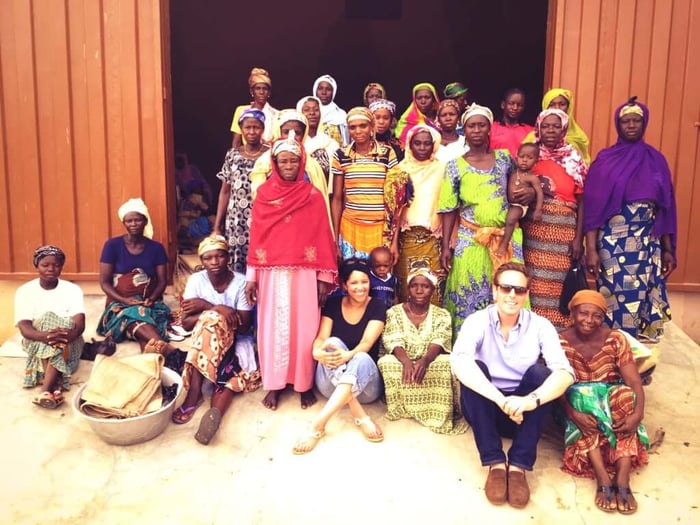
Our shea butter comes from Ghana, where it's handcrafted by women's cooperatives using traditional methods passed down through centuries. No heavy machinery. No industrial refinement. Just time-tested techniques that preserve every vitamin and fatty acid nature intended.
Shea trees take 15 years to produce their first nuts. Shea butter is the only natural fat that contains all the nutrients the skin needs and its production is a centuries-old craft practiced by local women for cooking and skincare. Think about that. Fifteen years of growth before the first harvest. The women who gather these nuts understand patience in a way most of us never will.
What makes our partnership special isn't just the quality of the shea (though unrefined shea contains copious amounts of nutrients, including Omega-9, Omega-6, Vitamin A, Vitamin E, calcium, magnesium, iron, copper, and catechins). It's the model itself. Fair Shea has been working in rural communities, with women and youth by empowering them to become drivers of their communities' development. We do this by providing diverse skills to women farmers, shea nut pickers and shea butter producers as well as youth with interest in agriculture to turn their businesses and farms into fair, profitable and sustainable enterprises.
Beyond the buzzwords
Let's talk about what fair trade actually means, because the term gets used so loosely it's lost all meaning. For the women producing our shea butter, it means direct market access. No middlemen skimming profits. We ensure that the added value remains at the source: the women in the rural areas of northern Ghana who gather the nuts and handle the production. There are no middlemen taking a portion of these women's earnings.
It means investment in communities. Schools. Healthcare. Clean water projects. The kind of infrastructure that transforms villages and creates opportunities for the next generation.
And crucially, it means preserving biodiversity. Demand for Shea is growing sharply, with volumes set to double by 2050. However, this growth is primarily for unprocessed Shea nuts, not Sheabutter, to extract oil used by the plant-based food industry. While Africa exports more Shea nuts, traditional Shea processing communities suffer as processing is mechanised in urban centres and abroad. Our partnerships support traditional processing methods that keep value in the communities and protect the savannah ecosystems where shea trees thrive.
The science of tradition
Here's what fascinates us about traditional shea production: it's inherently scientific. The women who make our shea butter understand extraction temperatures, oxidation prevention, and moisture preservation better than any lab manual could teach. They know exactly when nuts are ready for harvest, how long to roast them for optimal oil yield, and how to hand-whip the butter to the perfect consistency.
This is expertise. Over 75% of bioactive ingredients like vitamin A & E can be lost in the refining process. Industrial processing might be faster, but speed isn't everything. Sometimes traditional methods preserve bioactive compounds that industrial processing destroys.
Find shea in our range
We use this exceptional shea butter across multiple products in our range. You'll find it doing its deeply moisturising work in our Soothing Body Cream, where it helps strengthen the skin barrier. It's in our C-2 Believe, adding richness without weight. And it appears in targeted treatments where its anti-inflammatory properties really shine.
Each product represents not just our formulation expertise, but a direct link to the communities in Ghana who make this ingredient possible. When you use them, you're part of a supply chain that actually makes sense. One that values expertise over exploitation, quality over quick profits.
Small choices, real impact
This Fairtrade Fortnight, from 22 September to 5 October 2025, thousands of individuals, schools, community groups and companies across the UK will unite under Fairtrade's "Do It Fair" campaign to celebrate and stand with the people around the world behind the everyday products we love. But supporting fair trade isn't a two-week commitment. It's about recognising that every purchase is a vote for the kind of world we want to live in.
The women who make our shea butter aren't looking for charity. They need customers who understand that exceptional ingredients come from exceptional people. Who recognise that when you pay fairly for quality, everybody wins. The producers earn a living wage. The communities thrive. The environment is protected. And we get ingredients that are genuinely transformative for skin.
That's the model we believe in. Not because it makes us look good, but because it works. For everyone.
Next time you smooth one of our shea-enriched products onto your skin, know that you're using an ingredient that travelled thousands of miles with its integrity intact. From the wild shea forests of northern Ghana to your bathroom shelf, carrying the expertise of women who know that the best skincare isn't made in a lab.
Sometimes it's made under a tree, by hands that have been perfecting the process for generations.