

Most of us will develop stretch marks during pregnancy. It's not a failure of willpower or skincare routine - it's physics.
But genetics aren't destiny. There's real science behind keeping skin resilient under stretch.
Why your skin splits (and how to stop it)
Stretch marks form when your dermis (the deeper layer of skin) expands faster than it can adapt. The rapid stretching causes elastin fibres to rupture and collagen production to slow down. Pregnancy hormones make it worse by slowing collagen production even further, creating those characteristic lines.
Prevention is about two things: keeping the dermis conditioned with the right lipids to support collagen production, and maintaining hydration so skin stays pliable under stretch.
The oils that actually work (and the ones that don't)
Most stretch mark oils are mineral oil with a pretty label. Petroleum derivatives don't support collagen production. Always check the ingredients list.
The oils that make a real difference are those that support your skin's structural proteins:
Camellia oil is particularly impressive. It stimulates type I procollagen synthesis while inhibiting MMP-1, the enzyme that breaks down collagen. It's protecting existing collagen while building new supplies.
Pomegranate seed oil contains punicic acid (omega-5), which inhibits the specific enzymes that degrade collagen and elastin during stretching. Clinical studies show it can increase dermis thickness by nearly 15% and improve elasticity by almost 10% in six weeks.
Pumpkin seed oil delivers linoleic acid and phytosterols that promote fibroblast activity. These are the cells responsible for producing collagen. Studies show it supports well-organised collagen fibre formation during skin repair.
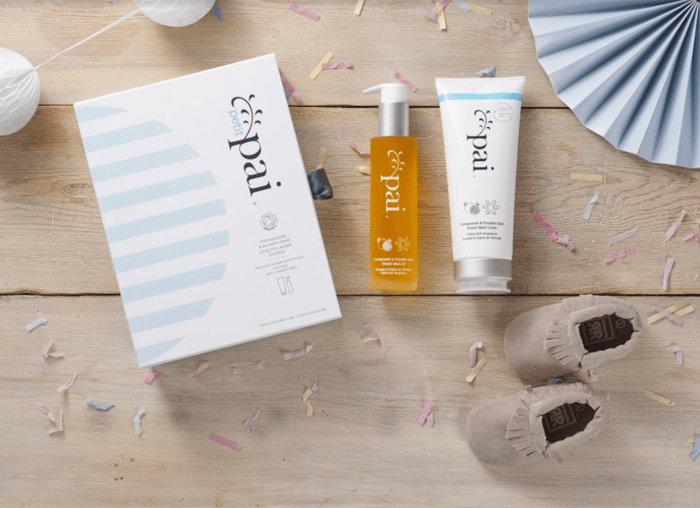
Our The Gemini combines all three, using CO2 extraction to preserve the heat-sensitive bioactives that cold pressing destroys. The evening oil delivers intensive lipid conditioning while you sleep. The morning cream provides deep hydration to keep skin pliable during the day. Both are completely free from essential oils and fragrance, making them safe throughout pregnancy and breastfeeding.
What to eat for stronger skin
Your diet directly affects your skin's ability to stretch and recover. Focus on foods rich in:
Vitamin C for collagen synthesis (citrus, berries, peppers)
Vitamin E for antioxidant protection (nuts, seeds, avocados)
Omega fatty acids for skin barrier function (oily fish, walnuts, flaxseeds)
Zinc for tissue repair (pumpkin seeds, chickpeas, cashews)
Skin with proper nutritional support maintains better elasticity and recovers faster postpartum.
The Weight Gain Factor
Rapid weight gain stretches skin faster than it can adapt. While pregnancy cravings are real (and valid), steady weight gain gives your skin time to adjust. For a healthy BMI, expect 25-35 pounds total: 1-5 pounds in the first trimester, then about a pound per week.
Steady weight gain gives your skin time to adapt to your changing body.
Hydration Inside and Out
Dehydrated skin loses elasticity faster. Drink plenty of water and use a body cream rich in barrier-supporting fatty acids. Apply morning and evening to areas prone to stretching: belly, breasts, hips, thighs, lower back.
Genetics do play a role - some skin types are naturally more elastic than others. But with the right approach, you can minimise their severity and help existing marks fade faster. The key is starting early and being consistent. Start early, stay consistent, and give your skin the molecular support it needs to stretch without splitting.