
Japanese Honeysuckle: The Natural Paraben Controversy
The natural beauty world has fallen hard for Japanese honeysuckle extract as a preservative. As brands chase paraben-free formulations, Japanese honeysuckle extract has become the go-to natural preservative. But scratch beneath the botanical surface, and you'll find a polyphenol thought to be the main bioactive component of the flower that shares a striking chemical similarity to synthetic parabens.
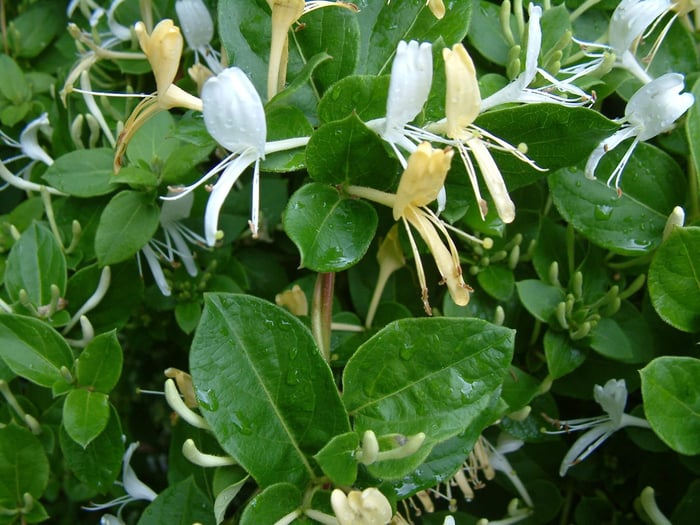
The appeal is obvious. Honeysuckle, also called 'Japanese Honeysuckle' (Lonicera japonica), ethereally lovely aroma and trumpet-like, two-lipped flowers, has been hailed for centuries for its unearthly fragrance and unique beauty. It sounds like the perfect natural preservative.
But the science tells a different story.
The Chemistry Behind the Controversy
Japanese honeysuckle extract contains naturally occurring para-hydroxybenzoic acid (also known as p-hydroxybenzoic acid or PHBA). They are esters of parahydroxybenzoic acid (also known as 4-hydroxybenzoic acid). Parabens are esters of para-hydroxybenzoic acid, from which the name is derived. See the connection? The "para-ben" name literally comes from this compound.
The distinction between natural and synthetic becomes irrelevant when you look at the chemistry. It is important to make the clear distinction between parahyrdoxybenzoic acid and parabens, as parabens are a synthetic chemical designed to mimic parahydroxybenzoic acid (esters). When it comes to preservative function, para-hydroxybenzoic acid and parabens work identically.
Parahydroxybenzoic acid is a phytochemical present in a variety of fruits and vegetables including blueberries, cucumbers, and olives. So yes, it's natural. But natural doesn't automatically mean different in effect.
The Processing Problem
The processing reveals the real problem. The Japanese honeysuckle extract used as a preservative isn't your grandmother's flower tea. The bottom line: Japanese Honeysuckle Extract is not a simple natural extract. It is created using very sophisticated technology, (nanoparticles, Collusion-Induced Dissociation, etc) contains salicylic acid, contains a small amount of butylene glycol, and is made up of other unknown compounds that do not occur in nature.
The extraction process is far more complex than simple botanical processing. Companies use this preservative to make their product look more natural on the ingredients list, but it's a highly-processed synthetic.
Even more concerning? The exact composition of Honeysuckle extract and Japanese Honeysuckle extract depends on the manufacture, therefore contamination with other preservatives or chemicals is a possibility. Without standardised production methods, the composition varies wildly between manufacturers.
What the Science Actually Says
The research shows clear antimicrobial activity. Multiple studies confirm that Japanese honeysuckle extract does have antimicrobial properties. Japanese Honeysuckle and Honeysuckle extracts have demonstrated the ability to deter microbial growth in acidic, low water environments for gram-positive and gram-negative Bacteria, though they are not as effective against mold (Papageorgiou et al. 2009). Another study done in 2009 yielded similar results, showcasing the strong antimicrobial activity of Japanese Honeysuckle (Rahman and Kang 2009).
When professional chemists and manufacturers advised us during our extensive research phase, the message was consistent: in terms of preservation mechanism and potential effects, there's minimal difference between naturally-derived para-hydroxybenzoic acid and synthetic parabens. They work the same way.
This matters because if you're avoiding parabens for precautionary reasons, as many of our customers are, then using an ingredient that functions identically misses the point entirely.
The Pai Approach: Transparency Over Trends
At Pai, we've chosen a different path. Rather than using Japanese honeysuckle extract to tick a "natural preservative" box, we've invested in preservation systems that align with our standards for both safety and transparency.
We take what's called a precautionary approach. If there's credible doubt about an ingredient, if the science suggests it functions like something we've chosen to avoid, or if we can't be certain about its processing and purity, we simply don't use it.
This isn't about following trends or making our ingredient lists look more "natural". It's about consistency in our formulation philosophy.
Natural Preservation That Actually Works
The natural preservation landscape has evolved dramatically since 2009. Today's options go far beyond botanical extracts with questionable processing. These molecules are all found in nature in plants such as pine resin, rowan berries and willow bark. It is a non-paraben, non-formaldehyde, non-isothiazolone based preservative system.
Modern natural preservation combines multiple approaches: carefully balanced pH levels, controlled water activity, chelating agents that starve microbes of essential minerals, and yes, naturally-derived antimicrobials that have been properly tested and standardised. This approach combines sophisticated science with genuine natural preservation.
At Pai, every preservation decision goes through rigorous testing. We don't just check that our products stay microbe-free. We ensure our preservation systems work in harmony with sensitive skin, maintaining the integrity of our formulations without causing irritation or disruption to the skin barrier.
The Bottom Line
Japanese honeysuckle extract occupies an uncomfortable middle ground between natural and synthetic. Japanese honeysuckle has gained popularity in the past few years as a natural preservative, because it mimics a paraben (note: it is not a paraben or a "natural" paraben).
For a brand built on transparency and scientific integrity, using an ingredient that walks, talks, and acts like a paraben whilst claiming to be paraben-free feels disingenuous. We make ingredient decisions based on function and safety, not marketing appeal.
Natural preservation has come a long way. Today's options offer genuine alternatives that don't require mental gymnastics to justify. At Pai, we've chosen preservation that's effective, transparent, and aligned with our commitment to sensitive skin.
For skincare ingredients, close enough isn't good enough.
Have questions about our preservation philosophy or any of our ingredients? Drop us a line at hello@paiskincare.live. We're always happy to talk science.