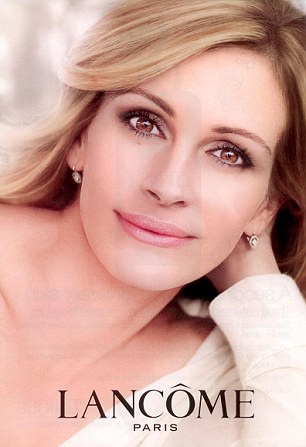


The beauty industry has a reality problem. From the infamous 2011 L'Oreal campaigns that got Julia Roberts and Christy Turlington ads banned for excessive airbrushing, to today's AI-generated faces selling skincare on Instagram, the gap between promise and possibility keeps widening.
Back then, the Advertising Standards Authority called out Lancôme and Maybelline for digitally erasing every line, spot and shadow from their models' faces. The brands defended their Photoshop marathons by claiming the retouching accurately represented product benefits. The ASA disagreed. The ads were pulled.
How digital manipulation has evolved since 2011
Thirteen years later, the tools have changed but the game hasn't. Now it's not just airbrushing we're dealing with. It's AI-generated before-and-afters. Filter-perfect influencer content where the filter does more work than the product. Virtual models with mathematically impossible skin selling real skincare to real people with real pores.
The irony? Roberts and Turlington were genuinely beautiful women in their early forties when those ads were shot. The digital team just couldn't resist turning them into poreless avatars. The message was clear: human skin, even beautiful human skin, wasn't sellable enough.
Norway now requires influencers to label retouched photos. The UK's considering similar rules. But enforcement is patchy and the technology moves faster than regulation. By the time one platform bans beauty filters, three new apps have launched with even more sophisticated reality-warping tools.
What clinical photography actually shows
The industry avoids admitting this: real skin has texture. Real results take time. Real improvement is measurable but not miraculous.
When we run clinical trials on our products, we photograph real skin under consistent lighting. No filters. No digital smoothing. Just high-resolution images that show exactly what changed and by how much. Our Rosehip Bioregenerate trials showed a 20% improvement in skin smoothness after eight weeks. Not 100%. Not overnight transformation. Twenty percent. Which, if you've ever dealt with scarring or uneven texture, is significant.
We publish our clinical photography guidelines openly. White background, consistent angle, same camera settings, no post-processing beyond colour calibration. Boring? Maybe. Honest? Absolutely.
The transparency test
Next time you see a beauty ad, ask yourself: could this person exist in real life? Can you see a single pore? Any natural shadows? The faint lines that appear when someone smiles?
If the answer's no, you're looking at digital fiction, not skincare results.
The push for transparency isn't just about honesty (though that matters). It's about setting realistic expectations. When brands show impossible results, they're not just misleading customers. They're creating anxiety about normal skin. Teaching people to hate their pores. Setting a standard that no cream, serum, or oil can actually meet.
Building trust through truth
At Pai, our clinical trials use real people with real skin concerns. Our before-and-after photos show actual results: reduced redness, improved hydration, softer texture. Not digital perfection. The improvements our testers see, measured and photographed without manipulation.
We also publish our trial protocols. How many participants. What conditions they had. How long they used the products. What percentage saw improvement. The boring stuff that actually matters if you're trying to decide whether a product might work for you.
Our skin changes with stress, hormones, sleep, diet, weather, age. No product delivers the same result for everyone. But honest brands show you the range of real outcomes, not the digital fantasy.
The ASA might have banned those L'Oreal ads in 2011, but the beauty industry's reality problem hasn't gone away. It's just got more sophisticated. The solution isn't more regulation (though that helps). It's brands choosing transparency over fantasy. Customers demanding evidence over promises. And all of us remembering that real skin, with all its imperfections, is exactly what skincare is designed to support.
Not transform into pixels. Support.