
Tiger Nuts: The Ancient Superfood Your Skin Has Been Waiting For
Archaeologists keep finding the same thing in early human fossils: tiger nuts. Lots of them.
The famous Nutcracker Man (one of the oldest human fossils ever discovered) earned his nickname from the sheer quantity of these stripy little tubers found preserved in his stomach.
Not Actually Nuts At All
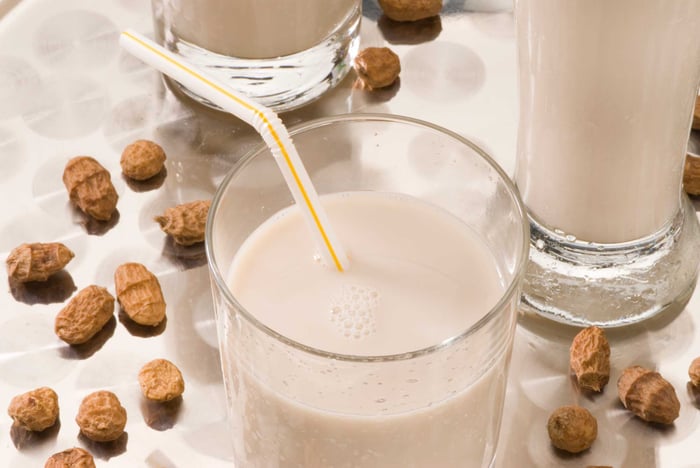
Tiger nuts are the tiny tubers of the yellow nutsedge plant, a grass-like crop that grows from Spain to Sudan. They're harvested like potatoes, then dried until they develop their characteristic stripy, shrivelled appearance. Hence the name, though they're about as related to actual nuts as we are to that Nutcracker Man.
In Valencia, they've been making horchata from tiger nuts for centuries. This creamy, naturally sweet drink predates modern plant milks by centuries.
You can eat them raw (chewy, slightly sweet), roasted (nuttier, crunchier), or ground into flour.
The Skin Science Behind The Snack
Tiger nuts contain all eight forms of vitamin E, not just the alpha-tocopherol you find in most supplements. This full spectrum of tocopherols and tocotrienols provides antioxidant protection that actually reaches your skin cells.
The vitamin C content supports collagen production directly. No vitamin C, no collagen synthesis. It's that straightforward. Tiger nuts deliver it alongside iron, and here's why that combination matters: vitamin C enhances iron absorption by up to 300%. That iron then supports oxygen delivery to skin cells, speeds wound healing, and gives skin that healthy glow that no highlighter can replicate.
The resistant starch content (twice as much as potatoes) feeds your gut bacteria. Those bacteria produce short-chain fatty acids that reduce inflammation throughout your body, including your skin. This gut-skin connection explains why digestive health shows up on your face.
What The Research Actually Shows
Spanish researchers studying tiger nuts found they contain specific compounds called flavonoids that inhibit elastase, the enzyme that breaks down elastin in your skin. Less elastase activity means better skin elasticity over time. The same studies identified significant levels of rutin and quercetin, both proven to strengthen capillaries and improve microcirculation.
The arginine content deserves a mention too. This amino acid converts to nitric oxide in your body, dilating blood vessels and improving circulation. Better circulation means better nutrient delivery to skin cells. It's the same mechanism behind that post-exercise glow, minus the exercise.
Tiger nut oil (yes, that's a thing) contains 80% unsaturated fatty acids, primarily oleic acid. That's the same omega-9 that makes rosehip oil so effective at supporting skin barrier function. The oil also contains phytosterols that help reduce transepidermal water loss.
Beyond The Hype
Tiger nuts aren't miracle workers. Here's what they actually do. They're nutrient-dense, yes. They provide compounds that support skin health, absolutely. But they're not going to reverse sun damage or erase expression lines. They support your skin's natural processes over months, not overnight.
The resistant starch that makes them so good for gut health can also cause digestive issues if you eat too many at once. Start small. A handful of dried tiger nuts or a small glass of tiger nut milk is plenty.
For skin benefits, consistency matters more than quantity. The antioxidants and minerals work cumulatively, supporting your skin's natural repair processes over weeks and months, not overnight.
The Sustainability Angle
Tiger nuts grow in poor soil with minimal water. They don't need pesticides because few pests bother with them. The entire plant gets used: the tubers for food, the leaves for animal feed, the waste for compost. In an era of resource-intensive superfoods, tiger nuts are refreshingly uncomplicated.
They're also perennial, meaning one planting yields multiple harvests. Compare that to annual crops that need replanting every year, depleting soil and requiring more inputs. If we're serious about sustainable beauty routines, the foods that support our skin health matter too.
How To Actually Eat Them
Raw tiger nuts taste milky and slightly sweet, with hints of almond and coconut. The texture takes getting used to: chewy, fibrous, definitely not crispy. Soak them overnight to soften them up, or buy them pre-soaked.
Tiger nut flour works brilliantly in baking, adding natural sweetness and a subtle nutty flavour. Use it to replace up to 25% of regular flour in recipes. Higher than that and things get dense.
Making horchata at home is simple: soak one cup of tiger nuts overnight, blend with three cups of water, strain through a nut milk bag. Add cinnamon if you want the traditional Valencia version. The leftover pulp makes excellent face mask material (seriously, the vitamin E content makes it genuinely beneficial as a gentle physical exfoliant).
The Bottom Line
Our ancestors ate tiger nuts for energy and sustenance. The fact they were unknowingly supporting their skin health was a bonus they never knew about. Now we know the science: the antioxidants that protect against free radical damage, the minerals that support collagen production, the fatty acids that maintain barrier function.
Are tiger nuts essential for good skin? No. Are they a nutrient-dense whole food that happens to contain an impressive array of skin-supporting compounds? Absolutely. In a world of overengineered supplements and miracle powders, there's something satisfying about a food that's remained unchanged for two million years.
Sometimes the best innovations are the ones our ancestors already figured out. Even if they had no idea why they worked.